Introduction: The “Precision Misjudgment” of the YouTube Algorithm
Late at night in Cambodia, I have a habit of watching hardcore digital and vintage audio repair videos on YouTube. As an observer who has been away from gaming for nearly 20 years but understands the underlying logic of internet advertising, my YouTube Chinese-language dashboard frequently stages a logical farce.
Ads for major offshore mobile games, along with cross-border proxy shopping ads for Yahoo Japan Auctions and Mercari, bombard me with aggressive precision. In the eyes of Google’s AI algorithm, my profile is flawlessly labeled: “Overseas Chinese + Targeted Chinese Audience + High-Net-Worth Mature Male interested in GPUs, Digital Tech, and Audio.”
The algorithm judges me to be the perfect “whale” and “prime consumer.” It watches me consume every second of those expensive ad creatives, assuming victory. What it doesn’t know is that I am merely a cold-eyed “budget crusher”—I don’t play games, and faced with the reality of cross-border logistics gaps, I close those proxy shopping tabs time and again. On this land, the grandeur of modern internet civilization is colliding violently with the brutal reality of regional geopolitics.
H1: Industrial Miracles vs. The Desert of Sentiment
Right now, sitting on my workbench is a 1983 Pioneer CT-A9.
This was the flagship cassette deck of Japan’s golden age of analog, built without compromise. It features a fully automatic slot-loading mechanism, three heads, quartz direct drive, and amorphous laser heads. After countless nights of fumbling and relentless effort, I have completed my own technical evolution, single-handedly restoring this complex mechanical monster to perfection. Every time I watch its fluorescent meters dance to the music, I feel a sense of detachment from the world, for in Cambodia, I am an absolute outlier in this field.
On Facebook, I see my neighbors in Bangkok, Haiphong, and Ho Chi Minh City thriving; countless second-hand dealers and audiophiles are “unboxing blind boxes” from shipping containers arriving from Japan. The vintage digital ecosystem there is prosperous. But when I excitedly registered for a proxy shopping account, following the ads planted by YouTube repair gurus, reality poured cold water on me—logistics routes simply don’t reach Cambodia; they only ship to China, Vietnam, or Thailand.
Thailand and Vietnam possess massive ports and mature customs networks, backed by vast “electronic waste” containers and “parts organ banks.” Cambodia, in the realm of vintage culture and hardcore tech DIY, is a complete ecological desert. On the local marketplace, besides cars and smartphones—the essentials for survival—you won’t find an ounce of soil for sentiment or hardcore DIY.
It is self-deprecatingly ironic: I can restore a 40-year-old complex mechanical beast, yet I couldn’t save the fragile microchips in my modern smartphone—it died recently, and those precious records vanished into thin air. In a sense, highly integrated modern digital civilization is far more fragile than the rough, bloody history of the past.
H2: A “Time Fault” Scraped Away by the Khmer Rouge
Why do the locals in Cambodia never engage in this? The answer lies in two overlapping temporal coordinates.
The late 1970s was the peak of global analog audio. Japan’s Pioneer, Sansui, and Sony set aesthetic benchmarks with heavy solid wood and pure copper needles. Yet, at that very moment, Cambodia was enduring the darkest hours of the Khmer Rouge (1975-1979).
In that catastrophe, not only were audiophile toys of “bourgeois sentiment” forbidden, but even glasses, watches, and books were deemed taboos. Knowledge and technical elites were systematically purged, and the nation was violently regressed to the most primitive agrarian mode of survival.
Vintage audio requires two luxuries: sustained economic accumulation and intergenerational technical soil. Cambodia’s history was forcibly scraped away here. While neighboring middle classes savored vinyl and cassettes, Cambodians fought for basic survival. This cultural discontinuity means today’s youth wake up to smartphones and TikTok; they cannot comprehend why anyone would bother with tens of kilograms of “scrap metal.”
H3: From Rice Paddies to Wastelands—The Survival Code
When I used my feet and time to measure this land, I discovered that the trauma of modern history still dictates the folk “survival instinct” and the “post-war waste-utilization” backdrop.
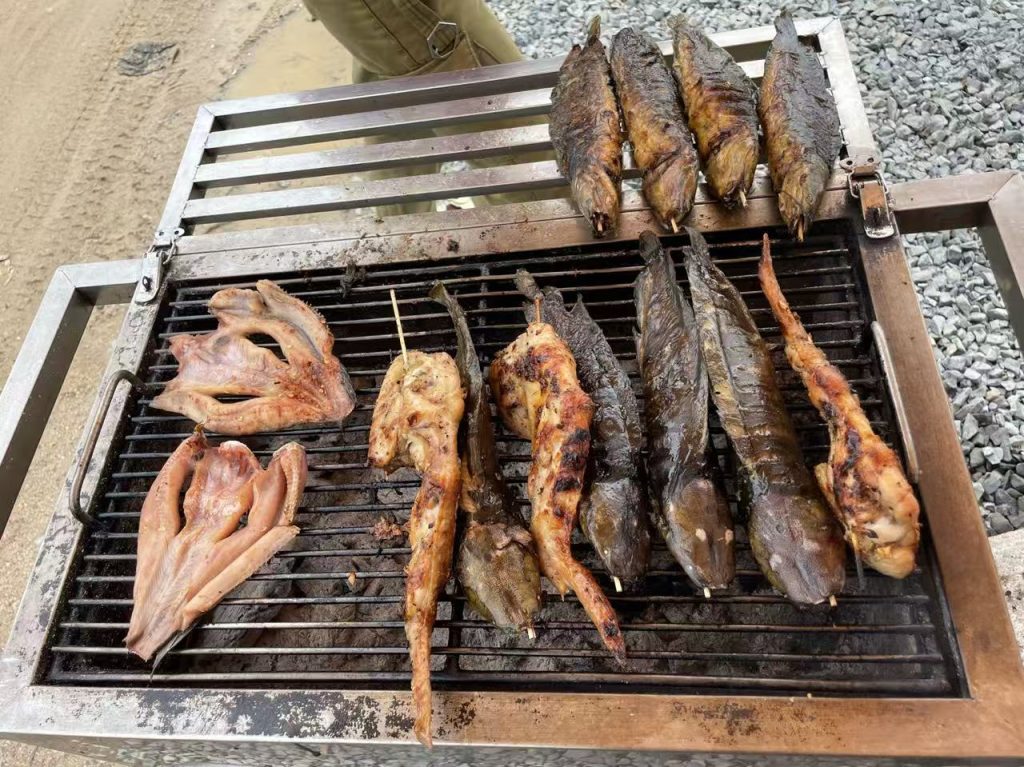
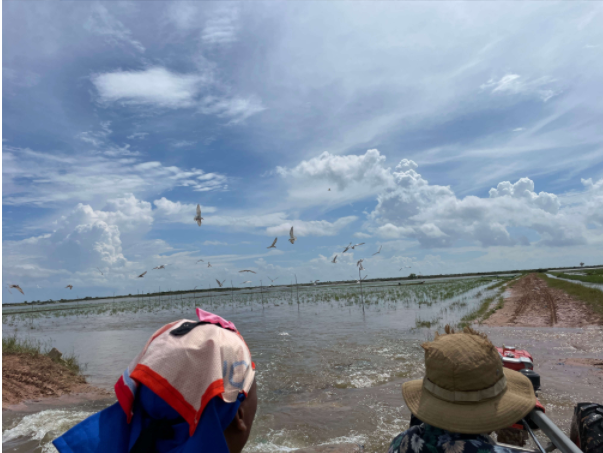
On the edge of the Tonlé Sap plains in Siem Reap, I was invited by locals to join them in the golden rice paddies to catch field rats. In this core granary of Cambodia, this industry—now a local delicacy exported to Vietnam—is rooted in collective memories born from the sheer starvation of the famine years.
Traveling north to the Plain of Jars in Laos, the scene brought a deeper shock. As the most heavily bombed country per capita, locals naturally repurpose massive unexploded ordnance casings into garden fences, house pillars, or flower pots. Lacking money for building materials, they transmute destruction into daily life.
Conclusion: The Observer’s Pragmatism
In this fractured Southeast Asian perspective, the logic completes a loop: Thailand and Vietnam, with decades of peace and growth, birthed exquisite consumer cultures; while in Cambodia and Laos, the ceiling of folk life remains locked in the layer of post-war waste utilization.
In this desert of sentiment where survival reigns supreme, the glowing orange fluorescent screen of a perfectly restored Pioneer CT-A9 feels like a lonely lighthouse. It reminds me that all the multi-million dollar ad creatives on the internet are merely empty code in the face of real geographical chasms and historical faults. Here, seeing through commercial maneuvering, holding tight to practical tools, and pursuing pragmatism with steady steps is the most clear-headed way to live.
Business Philosophy & Resources
In this wilderness, I adhere to a philosophy of pragmatic survival. Every route and observation shared here is based solely on my own fieldwork. If you are drawn to the raw reality shaped by these historical and geographical fault lines and intend to venture into these corners of Southeast Asia, please consider using the links below for reliable guides and travel protection. This comes at no extra cost to you, but it serves as fuel for my ongoing explorations.
-
Deep Exploration: Southeast Asian Heritage & Cultural Expeditions (via GetYourGuide)
-
Peace of Mind: For long-haul journeys, select suitable medical insurance based on your needs on VisitorsCoverage.
-
Essential Tech: Financial security is paramount. Activating Wise via ABA Bank: A Complete Guide (Based on my $20 Test)
Disclosure: This site contains affiliate links. We may receive a commission if you make a purchase through these links at no extra cost to you.
© 2026 Route6_Rider (CamTravel.xyz). Original agricultural philosophy from the red dust of Highway 6, Cambodia.